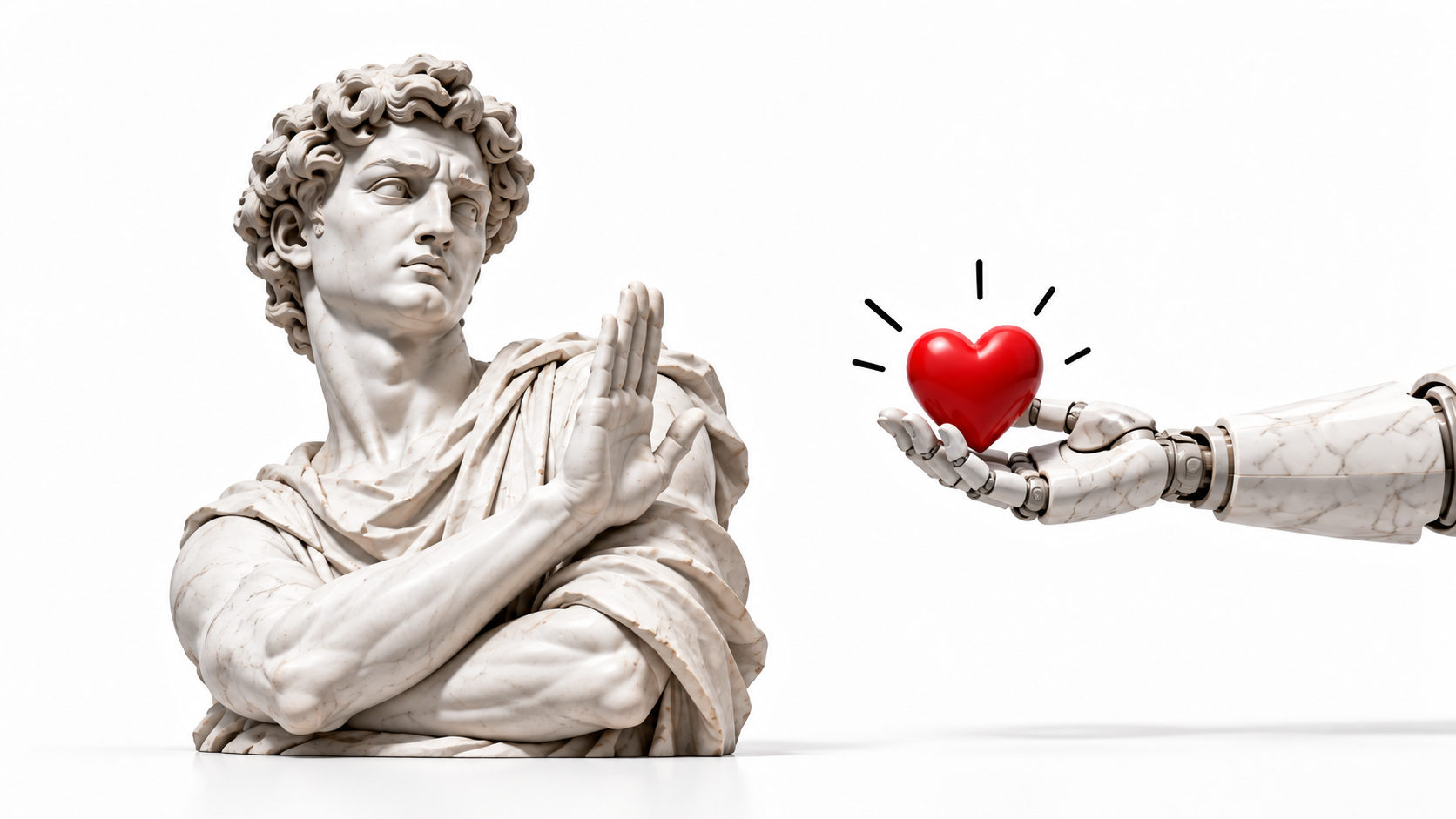
October 20, 2026
AI Shouldn’t Make Institutions Bullshit
The Three Pillars of Institutional Power: A Personal Perspective on Innovation, Stewardship, and Trust
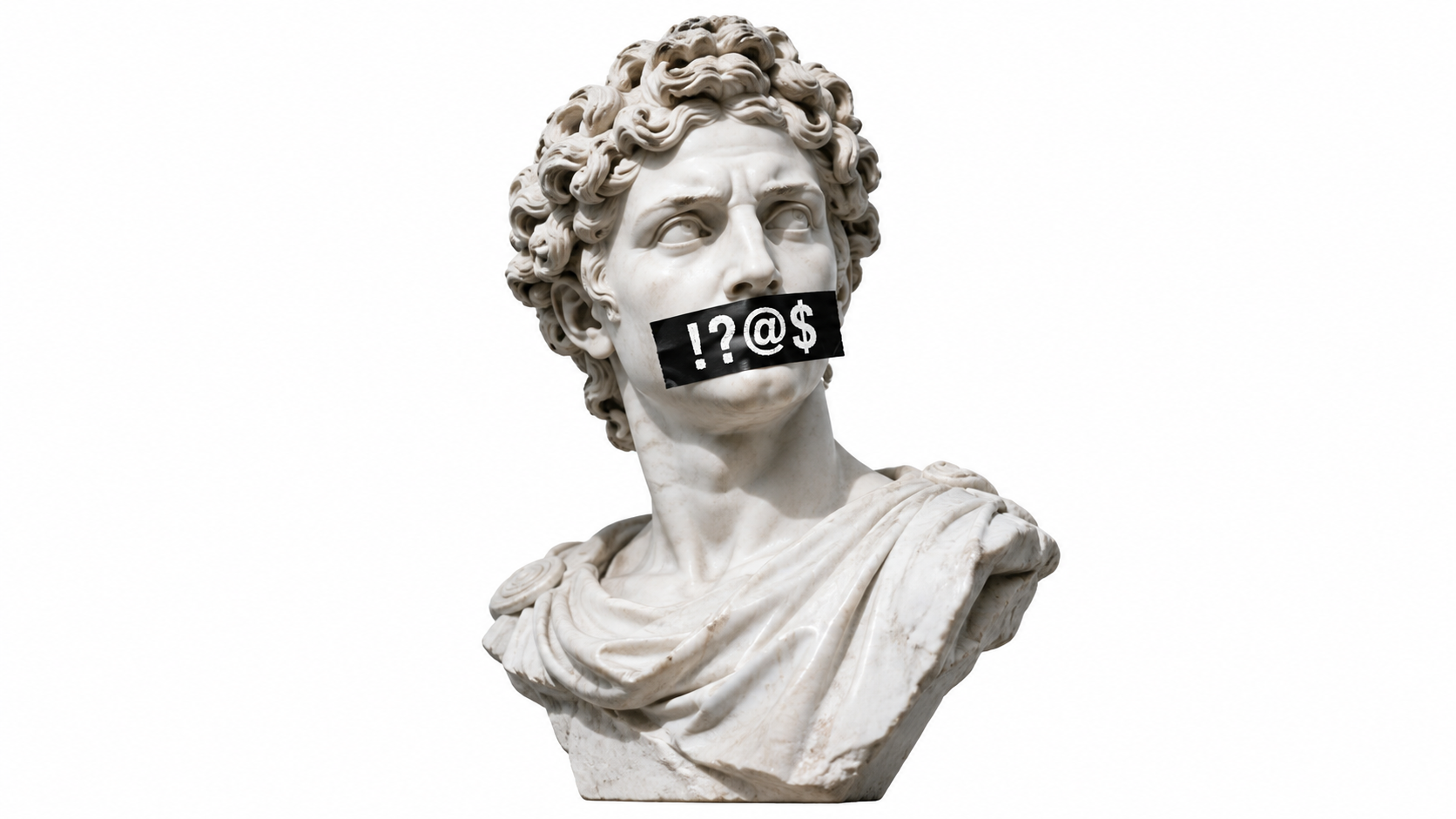
There's something deeply unsettling about a machine that can be completely wrong and sound completely certain.
Ask a large language model a question, and it will often give you an answer. Sometimes that answer is extraordinary. Sometimes it's complete nonsense.
The problem is that both can sound equally convincing.
For most people, that's frustrating.
For an institution whose credibility depends on the knowledge it preserves, develops, and shares, it's a considerably bigger problem.
Museums, libraries, archives, and other knowledge institutions spend decades, sometimes centuries, building collections and developing expertise around them. That work is deliberate, painstaking, and deeply human.
Then along comes a technology capable of generating an authoritative-sounding response about almost anything, including things it doesn't actually know.
I'm excited about what artificial intelligence could make possible for knowledge institutions. I think it could fundamentally change how we research, discover, organize, and share information.
But I also think we need to be careful about what happens when we allow AI to speak with an institution's authority.
The technology can generate the answer. The institution is still responsible for getting it right.
And that responsibility is where I think our AI strategies need to begin.
How I Got Here
My perspective on AI didn't begin with AI.
I studied library and information science, concentrating on archives and records management. That education fundamentally shaped how I think about information, institutional responsibility, and the relationship between knowledge and the people who preserve it.
Later, working in the cultural sector and becoming involved in AI enablement, I began hearing concerns from knowledge workers about what this technology might mean for their professions.
Misrepresentation. Job security. The possibility of presenting unreliable information to the public.
What interested me wasn't simply the skepticism. It was the professional responsibility behind it.
These were people who cared deeply about getting things right.
Over the summer, I spent considerable time attending events with AI founders, developers, and technology operators.
I was often one of the only people in the room working in a cultural institution.
Naturally, conversations tended to begin with questions about AI and art. People wanted to know about the extraordinary things museums might be doing with emerging technology.
I'd explain that much of the most immediately useful work was considerably less glamorous.
Internal research. Administrative processes. Information retrieval. Helping employees navigate complicated systems and institutional records.
The everyday work that keeps knowledge institutions functioning.
Interestingly, those conversations often became more engaging once we moved beyond the spectacle of AI.
They pushed me to think more seriously about what makes knowledge institutions distinctive, what they have to offer the technology industry, and what they need to protect as AI becomes part of their operations.
I kept returning to three things.
The Collection. Institutional Knowledge. Visitor Trust.
Together, I began thinking of them as the Three Pillars of Institutional Value.
The Three Pillars of Institutional Value
When I talk about institutional value, I'm not referring exclusively to financial worth.
I'm talking about what makes an institution important, what distinguishes it from others, and what gives people a reason to trust the knowledge it produces and preserves.
For me, that value rests on three equally important and deeply interconnected pillars.
A collection becomes less meaningful when the knowledge surrounding it is unreliable. Institutional knowledge loses authority when it misrepresents the material it's supposed to explain. And both lose credibility when the public no longer trusts the institution presenting them.
Weaken one pillar, and you put the other two at risk.
That's why I think institutions should evaluate AI through a simple question:
Does this technology strengthen the collection, institutional knowledge, and the trust people place in us—or does it put any of them at risk?
1. The Collection
The first pillar is the Collection.
For a museum, that might mean artworks and objects. For a library, books, manuscripts, and digital resources. For an archive, records and primary-source materials.
Collections are what make knowledge institutions distinctive.
But collections aren't valuable simply because institutions possess them. Their value also comes from preservation, accessibility, context, and the relationships institutions develop with the people who create and use them.
AI could transform how we interact with these resources.
Imagine being able to explore a large archive conversationally, identify connections across thousands of records, or discover relevant scholarship without navigating a maze of disconnected databases.
That's genuinely exciting.
What concerns me is the assumption that expanding access through AI necessarily requires surrendering control over the underlying materials.
I don't believe commercial AI companies should simply absorb institutional collections into their models without meaningful consideration of governance, licensing, creator rights, and institutional responsibilities.
That doesn't mean treating all knowledge as proprietary.
Public-domain material remains public-domain material. Institutions shouldn't use AI as an excuse to restrict access to resources that belong to the public.
But copyright-protected materials, unpublished scholarship, restricted archives, and collections involving living creators require a different level of consideration.
I'd rather see institutions maintain authoritative knowledge sources that AI systems can access under appropriate technical and legal arrangements.
When commercial products derive value from institution-controlled resources, institutions should explore fair agreements where they have the rights and leverage to do so.
The goal isn't to build walls around knowledge.
It's to expand access without surrendering stewardship.
2. Institutional Knowledge
The second pillar is Institutional Knowledge.
This is where I think the conversation becomes particularly important.
Institutional knowledge includes research, cataloging, provenance, conservation records, historical documentation, and the accumulated expertise of the people who spend their careers working with these resources.
Some of it exists in databases.
Some of it exists in archives.
An enormous amount exists in people.
And I worry that conversations about AI sometimes treat those people primarily as opportunities for efficiency.
How much time can we save? How many processes can we automate? How much work could we accomplish with fewer employees?
I understand why institutions ask those questions.
But they're not where I want the conversation to end.
Human expertise isn't an inefficiency to eliminate. It's part of what makes a knowledge institution valuable.
An archivist who uses AI to reduce repetitive administrative work should have more time for research, description, and discovery.
A librarian who develops a better information retrieval workflow should gain opportunities to improve services and assist people more meaningfully.
A registrar who automates part of a recurring process should be able to redirect attention toward work requiring professional judgment.
That's the kind of AI transformation I want to see.
It's also why I don't believe AI-generated information should automatically be treated as institutional knowledge.
A model can summarize records, suggest relationships, generate descriptions, and produce interpretations.
But generated output isn't the same thing as verified scholarship.
It needs to be evaluated against reliable sources, appropriate evidence, and the expertise of the people responsible for the work.
AI can help us work with institutional knowledge. It doesn't automatically inherit the authority of the people who created it.
That distinction matters enormously.
3. Visitor Trust
The third pillar is Visitor Trust, although I use the term broadly.
I'm referring to everyone who places confidence in a knowledge institution: visitors, readers, researchers, members, donors, artists, lenders, employees, and the wider public.
Trust isn't simply a pleasant institutional value.
It's the foundation that allows collections and expertise to mean something beyond the institution's walls.
When someone consults an archive, searches a library catalog, or reads an interpretation of an artwork, they're relying on the institution to have approached that information responsibly.
That doesn't mean institutions are infallible.
Scholarship changes. Attributions are reconsidered. Historical interpretations evolve as new evidence becomes available.
But there's a difference between knowledge evolving through research and an AI system inventing an explanation because it has learned to generate plausible language.
Imagine an AI assistant confidently attributing an interpretation to an artist who never expressed it.
Or presenting a fabricated historical detail as though it came from an authoritative institutional record.
Even if the error is eventually corrected, a larger question remains.
Why was the institution comfortable presenting that information as fact?
I don't expect AI to be perfect.
I do expect knowledge institutions to understand where their systems are unreliable before presenting them as trustworthy sources of information.
Trust takes generations to build and considerably less time to lose.
And unlike a model's context window or a subscription agreement, institutional trust isn't something you can simply purchase more of.
Governance Shouldn't Become an Excuse to Do Nothing
Here's where my enthusiasm for AI sometimes clashes with the culture surrounding institutional technology.
The risks are real.
Privacy, intellectual property, inaccurate information, security, and public trust all deserve serious attention.
But there's also a risk in becoming so consumed by what could go wrong that meaningful experimentation becomes practically impossible.
Another committee. Another intake form. Another lengthy discussion about hypothetical scenarios.
Meanwhile, the technology continues advancing, employees are already exploring it, and opportunities to improve research, accessibility, and institutional operations remain unrealized.
Paralysis isn't governance. And caution isn't automatically responsibility.
I believe institutions need appropriate safeguards, knowledgeable oversight, and clearly defined accountability.
But governance should help people understand how to experiment responsibly, not make experimentation so difficult that nobody bothers.
An internal AI pilot working with approved, appropriately protected information shouldn't necessarily face the same requirements as a public-facing assistant representing an institution's expertise.
Those are different applications with different consequences.
We should be willing to experiment quickly in controlled environments, learn from failures, and improve our systems before expanding their reach.
And we should be considerably more deliberate when asking the public to rely on what those systems produce.
This requires more than policy.
It requires technical expertise, staff development, collaboration across departments, and leadership willing to invest in institutional capability.
Governance should create the conditions for responsible innovation, not become its primary obstacle.
The Institution Needs to Learn First
Imagine a knowledge institution wants to introduce an AI research assistant.
The system might help employees navigate records, retrieve archival materials, or find relationships across institutional research.
I'd be enthusiastic about an internal pilot.
Start with appropriate data and a secure technical environment. Give knowledgeable employees access. Encourage them to challenge the model's responses, identify inaccurate citations, and investigate its limitations.
Let researchers, archivists, librarians, curators, and other knowledge workers contribute their expertise.
That process is valuable even before a successful product emerges.
Employees develop AI literacy. The institution learns where the technology performs well. Technical teams gain a better understanding of the requirements. And the people responsible for institutional knowledge become collaborators in shaping the systems that may eventually help others access it.
Now suppose that pilot begins producing useful results.
Would I immediately turn it into a public-facing experience?
No.
I'd begin with limited, clearly identified testing. Explain the system's limitations, establish human oversight, invite feedback, and validate its performance against authoritative sources.
Public participation can make these systems better. But public feedback, like AI output, still requires evaluation.
A confident correction isn't automatically a correct correction.
This is where I keep returning to the airplane oxygen-mask analogy.
You're instructed to secure your own mask before helping someone else with theirs.
Knowledge institutions should approach AI with a similar mindset.
We need to develop our own institutional capability before asking the public to depend on it.
That doesn't prohibit carefully supervised public experiments. It means understanding the difference between experimentation and presenting a system as an authoritative institutional service.
Stewardship Is More Than a Set of Principles
Responsible AI conversations often center on transparency, accountability, fairness, and trust.
Those principles matter.
But knowledge institutions also need to translate them into decisions that reflect their particular responsibilities.
That's what I want the Three Pillars of Institutional Value to provide.
Not another complicated review process.
Not a replacement for legal, ethical, or technical governance.
A practical lens through which to evaluate both risks and opportunities.
Does a proposed AI capability help people engage more meaningfully with the collection?
Does it strengthen institutional knowledge or introduce the possibility of distorting it?
Does it deserve the confidence of the people who will depend on it?
These questions shouldn't be used exclusively to reject ideas.
They're equally useful for discovering where AI could provide enormous value.
A well-designed AI research system might make institutional records more accessible, help employees uncover new connections, and eventually support a more informed public experience.
That would strengthen all three pillars.
And it's exactly the kind of innovation I'd like to see knowledge institutions pursuing.
Remember What Makes Us Valuable
Knowledge institutions don't exist to maximize token consumption, demonstrate enthusiasm for the latest model, or prove that they can move as quickly as Silicon Valley.
They exist to preserve collections, develop knowledge, support research, and serve the people who depend on them.
AI can help us accomplish those responsibilities in ways that weren't previously possible.
I want institutions experimenting with new tools. I want knowledge workers developing capabilities that give them more time for meaningful work. I want technologists collaborating with archivists, librarians, researchers, and curators to build systems that genuinely improve access to information.
And eventually, I want the public to benefit from those advances.
But I don't want us to forget what gives our institutions credibility in the first place.
The Collection. Institutional Knowledge. Visitor Trust.
Those are the Three Pillars of Institutional Value.
They're not an argument against AI.
They're a way of making sure that AI serves the people, knowledge, and responsibilities that make these institutions worth protecting.
Be ambitious. Experiment. Invest in your employees. Challenge assumptions. Don't allow endless speculation about risk to prevent meaningful progress.
But remain skeptical of what a machine claims to know.
Because the goal isn't to protect knowledge institutions from technology.
It's to make sure technology doesn't confidently bullshit away the very things that make us worth trusting.